Why Cats Fight: The 7 Hidden Triggers Most Owners Miss
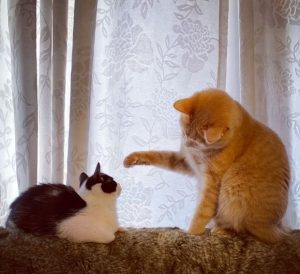 If you’re searching for a way to stop your cats from fighting, you’ve likely found plenty of advice on how to break up a scuffle or reintroduce them. But what if the fights keep coming back? What if, despite your best efforts, the tension never fully dissolves?
The missing piece is rarely the “how” to stop a fight—it’s the “why” it started in the first place.
Cat fights are not random acts of feline malice or simple “personality clashes.” They are the predictable, often preventable, result of specific pressure points in your home’s social and physical environment. They are symptoms of a system under stress.
This article reframes cat conflict. Instead of viewing your cats as adversaries, we’ll help you see them as individuals reacting to hidden triggers. Understanding which trigger is at play is the critical first step. It stops you from treating surface-level symptoms and starts you on the path to fixing the underlying system.
Here are the seven hidden triggers that quietly escalate tension into outright conflict in multi-cat homes.
1. Resource Pressure: The Silent Competition
Long before a hiss is heard or a paw is raised, cats compete for resources. In a world where survival is instinctual, security means reliable, stress-free access to life’s essentials: food, water, resting places, and litter boxes.
When these resources are scarce, poorly placed, or controlled by one cat, it creates a background hum of anxiety. A cat who is unsure if they can access the litter box without being ambushed, or who must hurry through meals under the stare of another, lives in a state of low-grade threat. This constant stress is a direct fuel for aggression.
Food access is one of the most common flashpoints in multi-cat homes, especially when one cat guards the food bowl and controls access.
This isn’t greed; it’s insecurity. The cat who appears to be “guarding” the food bowl is often the most anxious of all. The solution isn’t to punish the guard, but to engineer abundance and safety for everyone.
-
🔗 Related Reading: If mealtimes are tense, see our guide to Food Aggression in Cats. For conflicts over
 space, learn about Cats Fighting Over Sleeping Spots and the critical importance of Vertical Territory. If the litter box is a battleground, start with the Multi-Cat Litter Box Formula.
2. Play Style & Social Mismatch: Speaking Different Languages
Not all cats play—or socialize—in the same way. A high-energy, rambunctious young cat who loves to pounce and wrestle can be perceived as a terrifying bully by a timid, older cat who prefers gentle chases or quiet coexistence.
What one cat intends as an invitation to play (“I’m going to leap on your back!”) can be received as a predatory attack. This “crossed wire” in communication is a common root of what owners label as bullying. It’s less about malice and more about a fundamental mismatch in social language and energy levels.
-
🔗 Related Reading: To diagnose your cats’ interaction, learn the critical difference between Play Fighting vs. Real Fighting. If one cat is consistently overwhelmed, our article on Cat Play Style Mismatch offers solutions.
3. Stress Load & Trigger Stacking: The Last Straw
Cats are masters of hiding discomfort, but they have a breaking point. “Trigger stacking” is the concept that small, manageable stressors—a loud garbage truck, a strange cat outside the window, a change in your work schedule—can accumulate throughout a day or week.
A cat may tolerate the first three stresses, but the fourth minor event becomes the “last straw” that causes them to lash out, often at a nearby feline housemate. This is why fights can seem to erupt “out of nowhere” from an otherwise peaceful cat. The conflict wasn’t the first trigger; it was the final release of pent-up tension.
-
🔗 Related Reading: Learn to spot the subtle Signs of a Stressed Cat before they reach a breaking point. Major life changes like Moving House require careful management. An Environmental Enrichment Audit can help lower the overall stress floor in your home.
4. Redirected & Displaced Aggression: Attacking the Wrong Target
This is one of the most confusing triggers for owners. Redirected aggression occurs when a cat is intensely aroused by a stimulus it cannot reach—like seeing an intruder cat through the window—and turns its built-up frustration and aggression onto the nearest available target: your other cat, who was innocently walking by.
The victim cat is confused and often fights back, leading to a severe, seemingly inexplicable fight. The cats may then develop a lasting negative association with each other, fearing a repeat attack.
-
🔗 Related Reading: Our deep dive into Redirected Aggression in Cats explains this phenomenon in detail. It’s a common cause of Sudden Aggression and fights that happen after a Vet Visit.
5. Territory & Access Blocking: Control Equals Safety
In a multi-cat home, territory isn’t just about the whole house; it’s about controlling access to pathways and resources. A cat who lays in a hallway, “blocking” access to a room containing the litter box or food, is exerting control. This passive-aggressive behavior forces other cats to make themselves vulnerable—to ask for permission or risk a confrontation—to meet their basic needs.
This constant negotiation over access is profoundly stressful and directly leads to avoidance behaviors (like peeing outside the box) and explosive conflicts when the blocked cat finally challenges the gatekeeper.
-
🔗 Related Reading: This trigger is at the heart of many litter box issues. Learn what to do if one cat is Blocking the Litter Box, and understand why Peeing Outside the Litter Box or on a Bed is often a territorial stress signal.
6. Disrupted Group Dynamics: Changing the Rules
The social structure of a cat group is delicate. Any change in membership—adding a new cat, losing one, or even a kitten maturing into an adult—disrupts the established hierarchy and relationships. Similarly, a major change in the environment (renovations, a new baby) can destabilize the system.
Cats must renegotiate their relationships and territories from scratch, a process that often involves conflict as they test boundaries and re-establish a new equilibrium. A failed introduction can lock cats into a long-term feud.
-
🔗 Related Reading: Doing it right the first time is crucial. Follow our foundational guide on How to Introduce Cats. For specific scenarios, see Introducing a Kitten to an Older Cat or managing Age Differences. If things have gone wrong, our Cats Hate Each Other Reset Guide is your protocol.
7. Human Interventions That Backfire: The Well-Meaning Mistake
Our instinct to “fix” a fight can sometimes make it worse. Yelling, spraying cats with water, or trying to forcibly pull fighting cats apart can increase their panic and associate the chaos (and pain) more strongly with each other. Inconsistent responses from owners also add to environmental unpredictability, which is a core stressor for cats.
Effective intervention is calm, safe, and strategic. It separates the cats to allow adrenaline to subside and then addresses the trigger, not just the fight itself.
-
🔗 Related Reading: Always separate fighters safely. Learn How to Break Up a Cat Fight Without Getting Hurt. This philosophy is rooted in our core principles of Prevention Over Intervention and using Actionable Cat Behavior Protocols.
Moving From Triggers to Peace
The next time you see tension between your cats, pause. Don’t just see a fight. Ask: Which hidden trigger is likely at play?
Is it a resource issue? A case of redirected frustration? A social mismatch?
By identifying the trigger, you move from a cycle of reaction and confusion to a path of purposeful resolution. You stop blaming your cats for their natural instincts and start engineering a home that supports peace for all its inhabitants.
This framework is the foundation of everything we teach at MulticatBehaviour.com. Each article in our hubs is a detailed map for solving one piece of this complex puzzle. Your journey to a peaceful home begins not with a correction, but with understanding.
Explore our dedicated hubs to find the precise protocol for your cats’ hidden trigger: